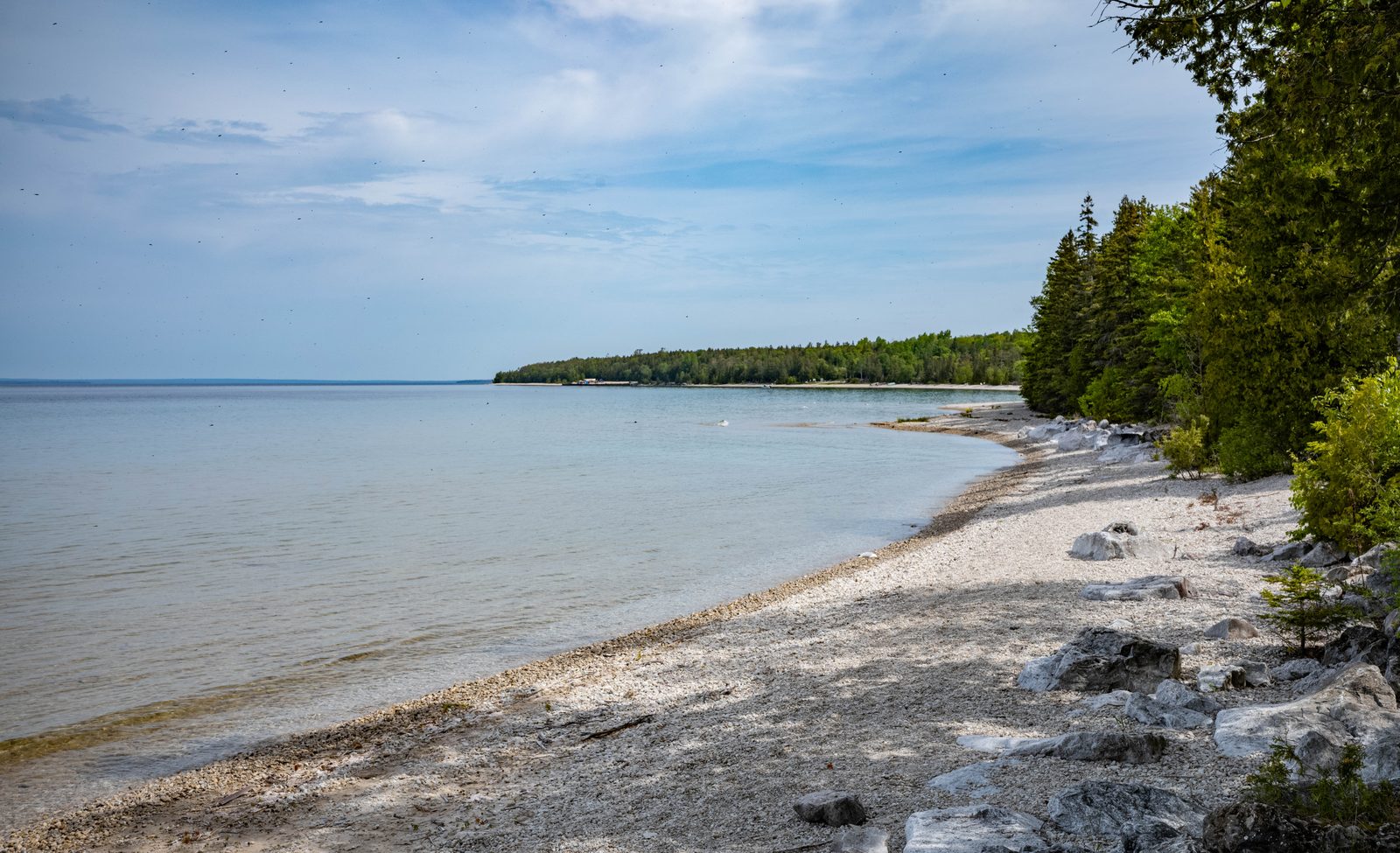

There is no place in the Midwest quite like Mackinac Island. Motor vehicles have been banned here since 1898, so the clip-clop of horse hooves and the whir of bicycle chains replace traffic entirely — some 500 horses do the work that cars do everywhere else. The island sits in the Straits of Mackinac between Michigan’s peninsulas, a limestone jewel where Victorian cottages, a 1780 British fort, and one of the grandest hotels in America share a few square miles with 500 year-round residents and more than a million summer visitors.
The island’s preservation is no accident. It was America’s second national park, from 1875 to 1895, and when the federal government handed it back, Michigan kept the promise: today about 82 percent of the island is a Michigan state park, and the entire island is a National Historic Landmark. The result is a place that feels genuinely out of time — no chain stores on Main Street, no traffic noise, just horses, bikes, hikers, and some of the most photographed scenery in the Great Lakes.
What to see and do
Start at Fort Mackinac, built by the British in 1780 on the bluffs above the harbor and the site of two battles in the War of 1812. Its 14 original buildings — the oldest standing military buildings in Michigan — hold exhibits, cannon firings, and rifle demonstrations with costumed interpreters. Then walk down to the Grand Hotel, opened in 1887: its 660-foot front porch is the longest in the world, and the hotel’s afternoon tea, dress code, and film fame (1980’s “Somewhere in Time” was filmed here) make it the island’s most photographed building. Non-guests can typically visit the grounds and porch for a fee.
The island’s natural wonders are just as famous. Arch Rock is a natural limestone arch standing about 146 feet above Lake Huron — the island’s most photographed natural wonder, reached by carriage tour, bike, or the stairway from the shore road. Nearby Sugar Loaf is a 75-foot limestone stack rising improbably from the woods. Circle the island on M-185, the 8.2-mile perimeter highway closed to cars — flat, scenic, and perfect by bike — and work the interior’s 70-plus miles of trails, carriage roads, and overlooks. British Landing, the island’s cemeteries, and the old stone church at Ste. Anne’s fill in the quieter history.
The island’s interior is the locals’ Mackinac — 70-plus miles of trails and carriage roads through state park forest, past the 75-foot Sugar Loaf stack, the cemeteries, and quiet overlooks most day-trippers never reach. Rent a bike and ride the 8.2-mile M-185 perimeter, the only state highway in America closed to cars, then cut inland to British Landing and the island’s geological oddities. Carriage tours cover the highlights efficiently if your time is short. And the Grand Hotel’s porch — 660 feet of rocking chairs and lake views — is open to non-guests for a fee, afternoon tea included if you reserve.
Planning your visit
Ferries run from St. Ignace and Mackinaw City (note: Mackinaw City is in the Lower Peninsula; St. Ignace is the U.P. departure) — the crossing takes under 20 minutes and runs frequently in season. Day trips are entirely feasible, but an overnight lets you experience the island after the last ferry leaves, when the crowds thin and the horses have the streets. Book lodging well ahead for summer weekends; the island’s hotels and B&Bs fill fast.
Bring walking shoes or rent a bike — you’ll cover serious ground. Fudge is the island’s famous export and worth the cliché; the crowds on Main Street are real in July and August, so start early for the fort and Arch Rock. And remember: the horses have the right of way, always.
Day trips work, but the island transforms after the last ferry: the crowds evaporate, the horses head home, and Main Street goes quiet. If you stay overnight, book far ahead for summer weekends. Expect Main Street crowds in July and August — start early for the fort and Arch Rock — and yes, the fudge is worth it. One rule governs everything: horses have the right of way, always, and the streets are theirs.
Frequently asked questions
Are cars allowed on Mackinac Island?
No — motor vehicles have been banned since 1898. Travel is by horse, carriage, bicycle, or on foot; about 500 horses work on the island in summer.
How do you get to Mackinac Island?
By passenger ferry from St. Ignace (in the U.P.) or Mackinaw City (in the Lower Peninsula). The crossing takes under 20 minutes. Private boats can dock at the marina.
What is Fort Mackinac?
A British fort built in 1780 on the bluffs above the harbor, site of two War of 1812 battles, with 14 original buildings — Michigan’s oldest standing military buildings — plus cannon firings and demonstrations.
What is the Grand Hotel known for?
Opened in 1887, its 660-foot front porch is the world’s longest. It’s a National Historic Landmark famous for afternoon tea, its dress code, and the 1980 film “Somewhere in Time.”
Can you visit Mackinac Island as a day trip?
Yes — ferries run frequently and the crossing is short. But an overnight stay lets you enjoy the island after the day crowds leave, which many visitors consider the real magic.
- Hours, fees, road conditions, and access change — verify with the managing park or visitor bureau close to departure.
- Cell service is thin across much of the peninsula. Download offline maps and tell someone your route.