Fondly called 'the Porkies,' this 60,000-acre park is Michigan's largest state park and protects the biggest tract of old-growth northern hardwoods in North America. Its signature draws are the Lake of the Clouds overlook, the waterfall-lined Presque Isle River corridor, and the Summit Peak observation tower at 1,958 feet. With Union Bay's modern campground, dozens of rustic and backcountry sites, trailside cabins and yurts, plus a winter sports complex and snowmobile trails, it is a true year-round wilderness destination about 20 miles west of Ontonagon.
About
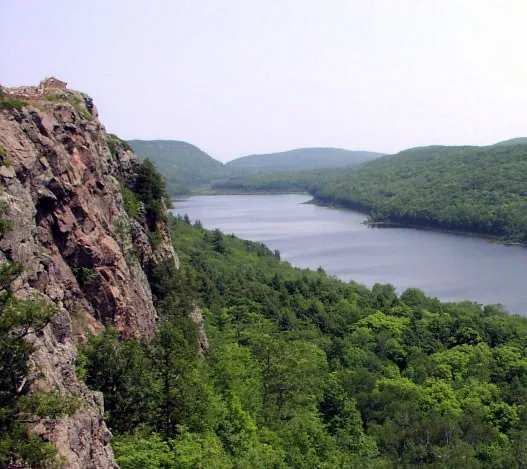
Porcupine Mountains Wilderness State Park sits in the Western U.P. near Ontonagon — about 20 miles east of the park. At 60,000 acres it's Michigan's largest state park, with the largest old-growth hardwood-hemlock forest in the Great Lakes region, a legally dedicated wilderness area and a National Natural Landmark. Its showpiece is the Lake of the Clouds, viewed from a 12-mile escarpment that rises abruptly from Lake Superior.
Camping
For Union Bay, Presque Isle, the rustic outposts, backcountry permits, cabins, and yurts, see the dedicated Porcupine Mountains camping guide. For ski-in cabins and yurts, dispersed winter camping, and winter road closures, see the winter camping guide.
The park has 254 sites: 100 modern sites at Union Bay, 50 rustic at Presque Isle, 65 primitive backcountry sites, 3 rustic outpost sites at Lost Creek, 8 rustic at the White Pine Extension and 3 rustic at Union River — plus 19 trailside rustic cabins, 4 yurts, 2 group-use sites, a tiny house and the Kaug Wudjoo Lodge. Union Bay Campground has electrical service; the 2026 DNR rates table lists 20/30-amp and 50-amp rates there, and no full-hookup rate. Backcountry reservations are strongly recommended in season via MiDNR Reservations; check the DNR page for current season dates and fees.
For a peninsula-wide comparison of site types, hookups, cabins, and seasons, plus how to book, see the camping hub, the state park campgrounds table, how to reserve a Michigan state park campsite, the RV parks and hookups guide, and the national forest campgrounds guide.
Trails and recreation
The park has more than 90 miles of hiking trails, including the Lake Superior Trail (17.1 miles), the Little Carp River Trail (11.3) and the Big Carp River Trail (9.6). Also on the list: the Escarpment Trail, Government Peak Trail, Overlook Trail, the North and South Mirror Lake trails, the Summit Peak Tower Trail, the Correction Line and Cross trails, and the East and West River trails along the Presque Isle River (per the DNR's official trail-descriptions PDF).
Day use, beach and boating
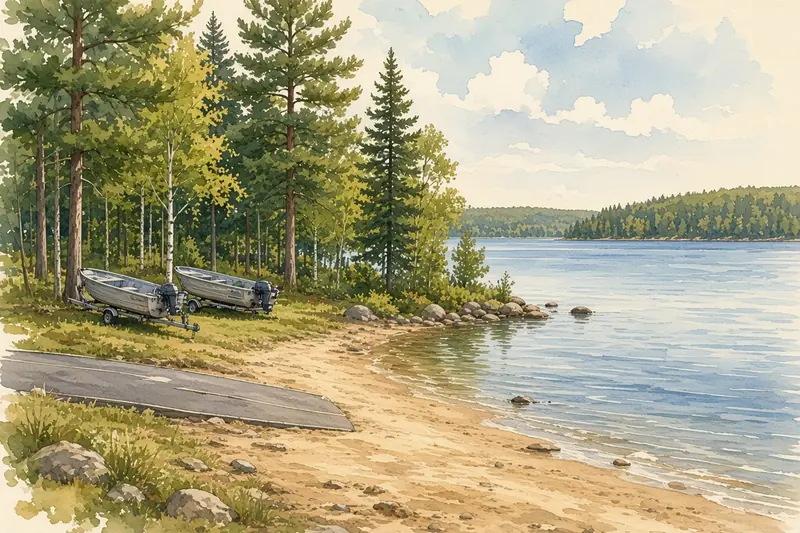
The Porcupine Mountains Visitor Center offers interpretive programs, an exhibit hall, trail-condition info, Wi-Fi and a gift shop. There's a sandy Lake Superior beach within walking distance of Union Bay Campground along M-107, and the group-use sites sit very near the beach too. Other day-use draws include an 18-hole disc golf course, a shooting complex and fall chairlift rides. There's a boat launch at Union Bay Campground, and fishing is listed as a popular activity — the Union River is described as a classic U.P. trout stream, and the Little Carp River as good brook trout fishing. Cabins on inland lakes are equipped with a boat and personal flotation devices.
Winter
The Porcupine Mountains Winter Sports Complex (ski hill) is joined by groomed winter trails. Park roads close to vehicles in winter and become designated snowmobile trails, and dispersed winter camping is available in the backcountry once the ground is snow-covered. Check the DNR page for current season dates and fees.
The park is not a designated dark-sky park, but the north-facing Lake Superior shoreline is a dark place to watch the aurora when access is open. See the northern lights guide and confirm winter road and parking conditions before a night visit.
Getting there
Porcupine Mountains Wilderness State Park is near Ontonagon (about 20 miles east of the park). A Michigan Recreation Passport is required for entry.
Good to know
- The scenic Presque Isle River corridor with waterfalls and rapids
- Summit Peak observation tower at 1,958 feet, the highest point in the park
- Porcupine Mountains Winter Sports Complex, visitor center with interpretive programs, and the summer Porkies Music Festival
Frequently asked questions
Can I reserve a campsite at Porcupine Mountains Wilderness State Park?
Backcountry reservations are strongly recommended in season via MiDNR Reservations; check the DNR page for current season dates and fees.
Does Porcupine Mountains Wilderness State Park have electric hookups?
Union Bay Campground has electrical service; the 2026 DNR rates table lists 20/30-amp and 50-amp rates there, and no full-hookup rate.
Can I swim at Porcupine Mountains Wilderness State Park?
There's a sandy Lake Superior beach within walking distance of Union Bay Campground along M-107, and the group-use sites sit very near the sandy beach of Union Bay.
Are there hiking trails at Porcupine Mountains Wilderness State Park?
Yes — more than 90 miles of hiking trails, including the Lake Superior Trail (17.1 miles), the Little Carp River Trail (11.3) and the Big Carp River Trail (9.6), plus the Escarpment Trail, Government Peak Trail, Overlook Trail, the North and South Mirror Lake trails, the Summit Peak Tower Trail, the Correction Line and Cross trails, and the East and West River trails along the Presque Isle River (per the DNR's official trail-descriptions PDF).
Do I need a Recreation Passport to visit?
Yes. A Michigan Recreation Passport is required for entry to all Michigan state parks, including day visits.
- Hours, fees, camping availability, and trail conditions change with the seasons — verify current details on the park’s official Michigan DNR page before you go.
- A Michigan Recreation Passport is required for entry to Michigan state parks.
- Reserve campsites well ahead for summer weekends; many U.P. parks fill up.