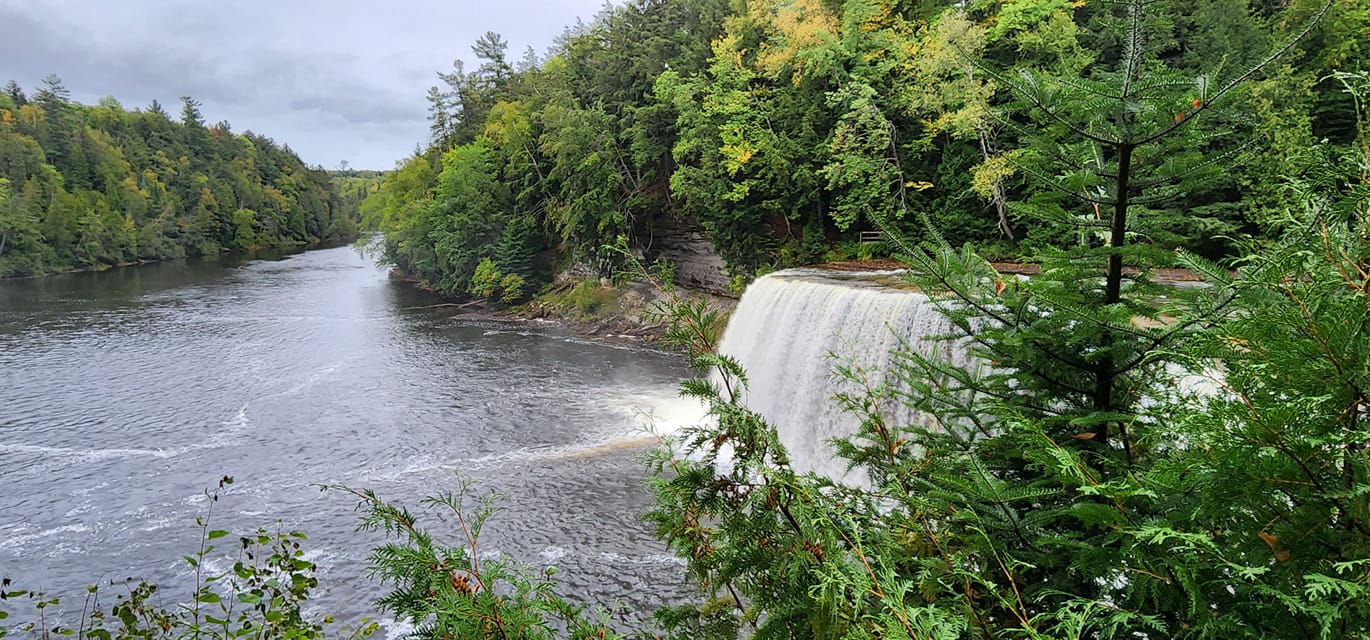
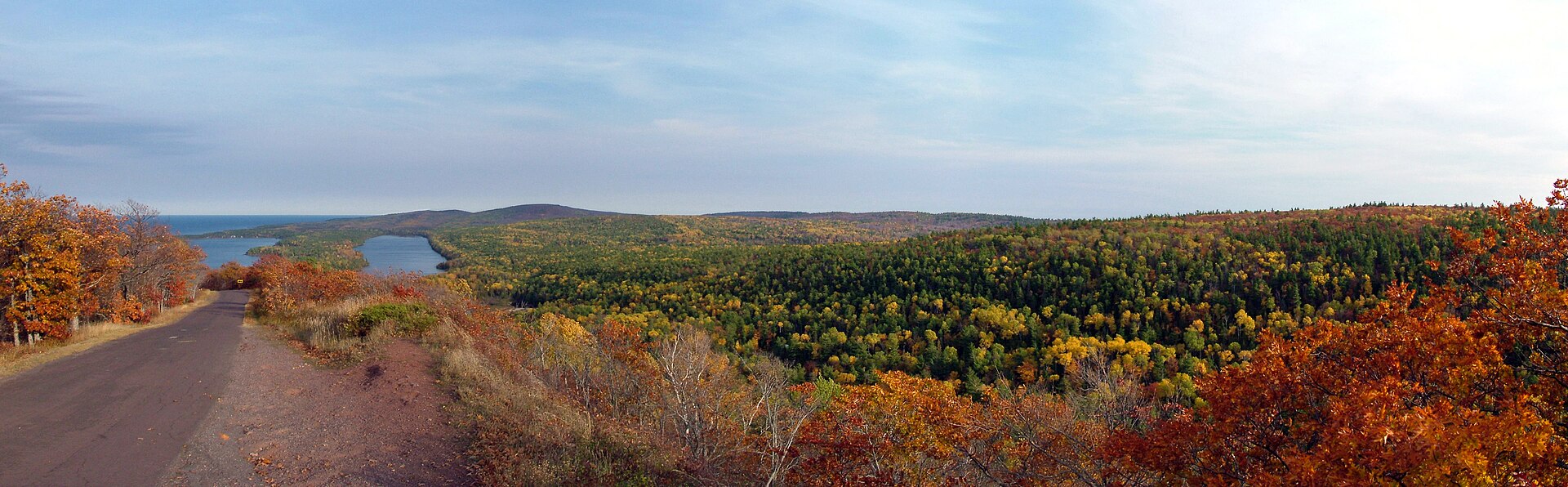
The best time to visit the Upper Peninsula depends on what you want to see. Fall color, waterfalls at full flow, boat cruises on Lake Superior, and snow sports each peak in different months. For most first-time visitors, the sweet spot is mid-July through early October. The bugs have thinned out, the cruises and ferries are running, and the forest is either green or turning.
Quick picks by goal
Fall color
Late September through the first weeks of October. Color typically begins in mid-to-late September, peaks in the first three weeks of October, and moves from the western and interior U.P. toward the east and the lakeshores (UPTRA). See our fall color timing guide.
Waterfalls at full flow
Mid-to-late April through early May for most of the U.P. (UPTRA). Visit Keweenaw puts the Keweenaw’s best window earlier, mid-March to late April. See our flow and conditions guide.
Beaches, hiking, and boat tours
July and August are the warmest months. Pictured Rocks Cruises run daily from mid-May through mid-October (picturedrocks.com), so July through September gives you the most options.
Fewest bugs
Late summer into fall. Black flies and mosquitoes peak around mid-June and fade through July (Visit Keweenaw). Ticks are active whenever the ground is snow-free.
Snow and ice
December through March. Ice curtains and columns near Munising typically form by mid-December and last until early April (NPS). See the winter guide.
Northern lights
Cloudless nights from August through April, with April, October, and November named as peak months by UPTRA. See how to see the aurora.
Month by month
| Month | Avg high / low | What to expect |
|---|---|---|
| January | 24.6° / 12.4° | Snow season. Ice formations stand near Munising from about mid-December to early April (NPS). |
| February | 26.9° / 12.5° | Deep winter. The Michigan Ice Fest is held at Pictured Rocks every February (NPS). |
| March | 35.3° / 21.0° | Late winter; snow cover remains. Keweenaw waterfalls begin to wake with snowmelt (Visit Keweenaw: best viewing mid-March to late April). |
| April | 45.8° / 31.0° | Snowmelt and spring rain. Waterfalls are strong, typically mid-to-late April through early May (UPTRA). Snow can stay on the ground in the Pictured Rocks area until late April (NPS). |
| May | 58.7° / 40.8° | Pictured Rocks Cruises begin in May (2026 season opened May 9). Mosquitoes arrive mid-to-late May and black flies by late May (Visit Keweenaw). |
| June | 67.9° / 50.1° | Long days and green forests. Black flies and mosquitoes peak around mid-June (Visit Keweenaw). |
| July | 74.6° / 57.7° | Warm. Mosquitoes wane in early July; deer flies peak in late July and August (Visit Keweenaw). |
| August | 74.3° / 58.1° | Warmest stretch, with July. Deer flies are most common near hot, sunny beaches and shorelines (Visit Keweenaw). |
| September | 67.3° / 51.6° | Color typically begins in mid-to-late September (UPTRA). Cruises, ferries, and most seasonal attractions still operate. |
| October | 53.9° / 40.0° | Color typically peaks during the first three weeks (UPTRA). Pictured Rocks Cruises run through mid-October. Aurora season is strong (UPTRA lists October and November as peak months). |
| November | 40.6° / 28.5° | Quiet shoulder season. Snow usually begins to accumulate around mid-November in the Pictured Rocks area (NPS). Aurora peak months include November (UPTRA). |
| December | 30.2° / 18.6° | Winter begins. Ice formations start to form around mid-December (NPS). |
Season by season
Winter (December–March)
Snow dominates. The National Park Service says Munising averages about 140 inches of snow a year and Grand Marais a bit more, and snow usually starts to accumulate by mid-November and lasts until late April. Michigan Tech describes Houghton as a 200-plus-inch snow town. Pictured Rocks does not plow park roads other than Sand Point Road in winter, so plan for snowshoes, skis, or a snowmobile if you want to go beyond it. Winter is the season for snowmobiling, cross-country skiing, ice climbing, and ice formations; it is not the season for most waterfall hikes.
Spring (April–May)
Spring arrives late and unevenly. Melting snow and April rain swell the rivers and push the waterfalls to their strongest flow, typically from mid-to-late April into early May (UPTRA). Expect mud, patches of snow on shaded trails, and variable weather. By late May, mosquitoes and black flies are out. Some seasonal services, including Pictured Rocks Cruises (which opened May 9 in 2026), are just starting up.
Summer (June–August)
Summer is warm rather than hot, with Marquette’s average highs in the mid-70s in July and August (NOAA). June is the peak of black fly and mosquito season, according to Visit Keweenaw; by July the numbers fall, and deer flies take over in late July and August. Smaller waterfalls can thin to ribbons in dry stretches; the NPS notes that Bridalveil Falls often slows to a trickle in dry summers.
Fall (September–mid-November)
Fall is the most popular season for good reason. Bugs are mostly gone, days are cool, and the color moves across the peninsula over several weeks. Weather can speed up or slow down the season, so check the weekly UPTRA color report before you commit to dates. By November the landscape is bare, services are winding down, and snow begins to arrive.
Bug calendar
- Mosquitoes: arrive mid-to-late May, peak mid-June, and wane in early July (Visit Keweenaw).
- Black flies: arrive late May, peak mid-June, and are mostly gone by July (Visit Keweenaw).
- Deer flies and horse flies: peak briefly in late July and August, near sunny shorelines and beaches (Visit Keweenaw).
- Ticks: active any time the ground is free of snow, especially in tall grass and brushy trails (Visit Keweenaw).
Heavy snow cover into spring and cool temperatures delay these insects, while warm springs bring them early (Visit Keweenaw).
What is open when
- Pictured Rocks Cruises: daily from mid-May through mid-October, with multiple departures. Fall wind can affect departures day to day, and cruises frequently sell out (picturedrocks.com).
- Pictured Rocks roads in winter: the park plows only Sand Point Road (NPS).
- Waterfalls: Bond Falls, among others, is open year-round, but access and conditions vary. Check each guide’s status note.
Hours, schedules, and closures change; confirm with the operator or agency before you go. Our packing list and weather guide cover what to bring.
Plan around the weather, not just the calendar
The numbers above come from one weather station in Marquette. The Lake Superior shore is cooler than inland towns in summer and snowier in winter, and conditions can differ a lot over a few miles. Check the forecast for the specific area the night before and the morning of any outing.
Frequently asked questions
What is the best month to visit the Upper Peninsula?
For many visitors it is late September to early October, when fall color typically peaks and the black flies are gone (UPTRA; Visit Keweenaw). July and August are the best months for boat cruises and warm-weather hiking.
When are the black flies the worst?
Black flies typically arrive in late May and peak around mid-June, fading through July, according to Visit Keweenaw. Timing shifts with the weather.
When do the waterfalls peak?
Mid-to-late April through early May for most of the U.P. (UPTRA). Visit Keweenaw says the Keweenaw’s best window is typically mid-March to late April.
When can I see the northern lights?
Aurora can show on clear, dark nights from August through April, and UPTRA lists April, October, and November as peak months. You need clear skies and a favorable space-weather forecast.
When does snow start and end?
In the Pictured Rocks area, snow usually begins to accumulate by mid-November and lasts until late April (NPS).
Sources
- NOAA NCEI, 1991–2020 U.S. Climate Normals, Marquette, MI (USW00014838), monthly temperature normals.
- Michigan’s Upper Peninsula Travel & Recreation Association, Fall Color Report; Michigan’s Waterfalls in Spring; Northern Lights and Stargazing.
- Visit Keweenaw, Bug Guide to the Keweenaw; Waterfalls.
- National Park Service, Pictured Rocks National Lakeshore, Winter Activities and Waterfalls.
- Pictured Rocks Cruises, Tickets & Schedule.
- Michigan Technological University, The Copper Country (Houghton snowfall: “200-plus inches”).
- Hours, fees, road conditions, and access change — verify with the managing park or visitor bureau close to departure.
- Cell service is thin across much of the peninsula. Download offline maps and tell someone your route.