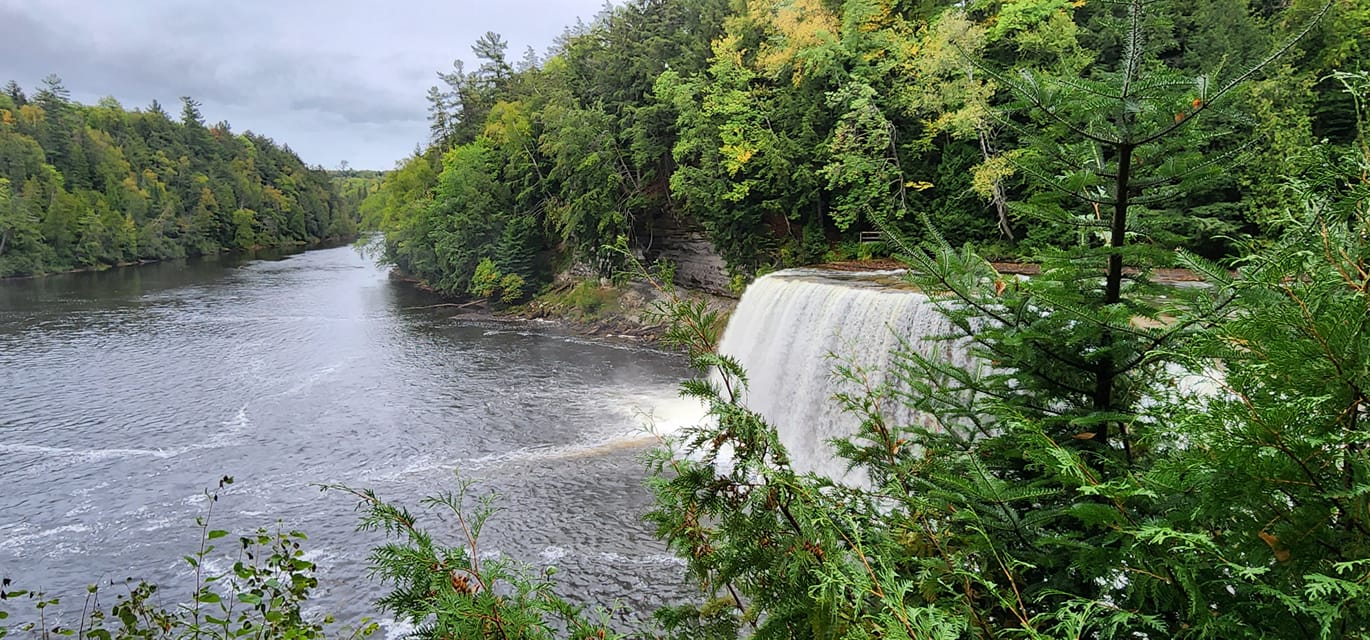
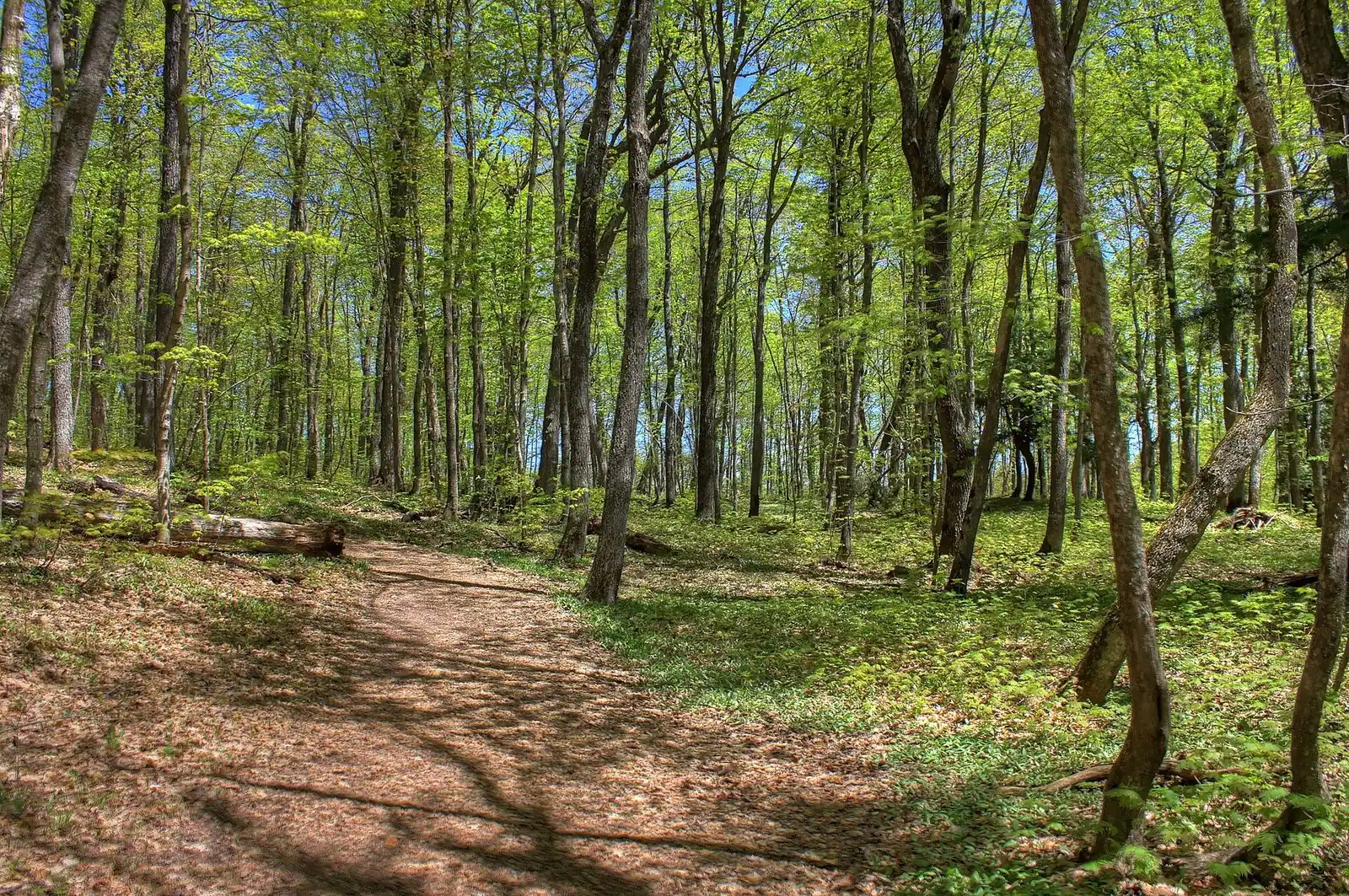
Upper Michigan weather has a personality all its own, and Lake Superior is the reason. The big lake cools the air in summer, warms it in early fall, and loads winter storms with snow that can bury the Keweenaw. Whatever month you visit, the forecast matters — and so does your packing list.
Related: Best time to visit, month by month.
About the seasons
Spring arrives late. April and even May can still bring snow and muddy roads, and black flies show up once it warms. By June the peninsula turns green and summer settles in — mild, rarely hot, with long daylight hours thanks to the northern latitude. Fall is crisp and glorious from mid-September into October, and it is also the busiest season in many towns. Winter is long, with snow on the ground from November into April in many areas.
Lake effect snow
When cold air crosses the relatively warm water of Lake Superior, it picks up moisture and dumps it as snow on the downwind shore. This is lake effect snow, and it is why the western U.P. — especially the Keweenaw Peninsula — routinely records some of the deepest snow totals east of the Rockies. If you travel in winter, watch forecasts closely, keep your fuel tank full, and expect travel times to stretch.
What to pack
Layers are the rule in every season. Even in July, evenings by the lake can turn chilly, so pack a fleece or jacket. In fall, add a warm hat and gloves. In winter, insulated boots, a heavy coat, and a vehicle emergency kit are not optional. Year round, bring rain gear, bug protection for late spring and early summer, and download offline maps — forecasts change fast and cell service is thin in the backcountry.
Month by month at a glance
January–March: Deep winter. Expect snow-covered roads, very short days, and the best conditions for skiing, snowmobiling, and frozen waterfall hikes. April–May: Mud season. Trails thaw, black flies arrive, and waterfalls run at their most powerful with snowmelt. June–August: Prime travel season — mild days, cool nights by the lake, and warm enough for swimming in inland lakes. September–October: Crisp air, peak fall color, and the busiest weekends of the year. Book lodging early. November–December: The quiet season returns as snow rebuilds and many seasonal businesses close.
Checking the forecast
Check a reliable forecast the night before any outdoor outing, and again the morning of. Conditions near Lake Superior can differ sharply from inland towns just a few miles away, so look at the forecast for the specific area you plan to visit, not just the nearest city.
- Hours, fees, road conditions, and access change — verify with the managing park or visitor bureau close to departure.
- Cell service is thin across much of the peninsula. Download offline maps and tell someone your route.