
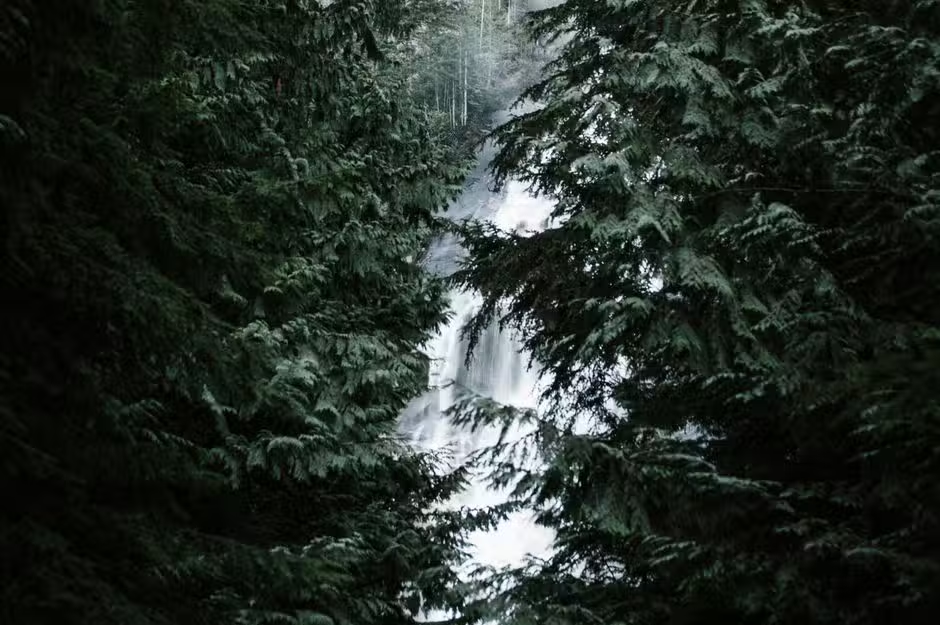
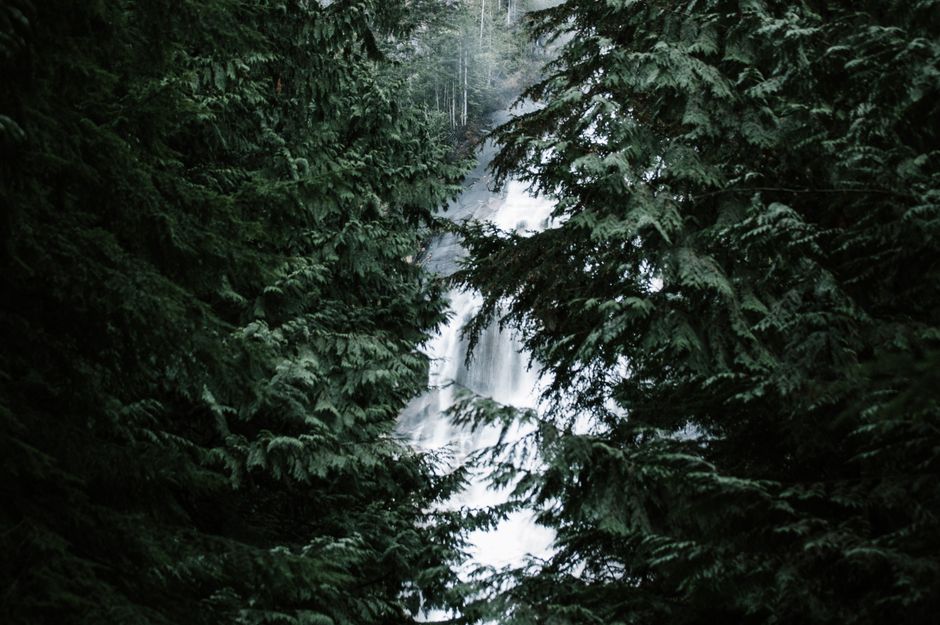
The Upper Peninsula of Michigan holds more than 300 waterfalls, according to the official UP travel website. While some are easy to reach and well-signed, others require a bit more effort or local knowledge to find. If you want to escape the crowds and discover cascades that feel like your own secret, this list of hidden waterfalls in the Upper Peninsula points you in the right direction. Spring, when snowmelt and rain swell every stream, is the best time to see them at full roar. Lace up your hiking boots and bring your sense of adventure.
Bond Falls: A Hidden Gem Near Paulding
Bond Falls sits in Paulding, Michigan, and is one of the three majestic waterfalls in the Keweenaw area that also includes Agate Falls and O’Kun de Kun Falls. A Facebook group post describing hidden gems in the UP specifically calls out Bond Falls as a hidden location. The waterfall spreads across a wide rock face, creating a gentle curtain of water that is especially photogenic in autumn when the surrounding maples turn orange and red. There is a boardwalk and viewing platform that makes access easy, but the road leading there is quiet and the trail sees far fewer visitors than the major state park falls.
Getting to Bond Falls
From Highway M-28, follow the signs toward Bond Falls Flowage. The parking area is small, so arrive early on summer weekends. A short, well-maintained path leads to the main overlook and a lower bridge that crosses the river below the falls. Plan to spend about thirty minutes enjoying the view and listening to the water.
Agate Falls: A Roadside Surprise on M-28
Agate Falls is located on M-28 in Trout Creek, Michigan. It is often overshadowed by Bond Falls, but it is just as impressive in its own right. The cascade drops in a ragged series over ancient sandstone ledges, and the best view is from a metal bridge that spans the Ontario River just downstream. Because it is visible right from the highway pull-off, many people drive past without stopping. That makes it a hidden waterfall in the sense that it is easy to miss unless you know it is there.
Tips for Visiting Agate Falls
There is no entrance fee to visit Agate Falls, and the site includes a small parking area and a picnic table. The walk from your car to the bridge is less than a minute, making it a good stop for families or anyone with limited time. Combined with Bond Falls and O’Kun de Kun Falls, you can create a full day of waterfall chasing in the western UP.
O’Kun de Kun Falls: The Quietest of the Keweenaw Trio
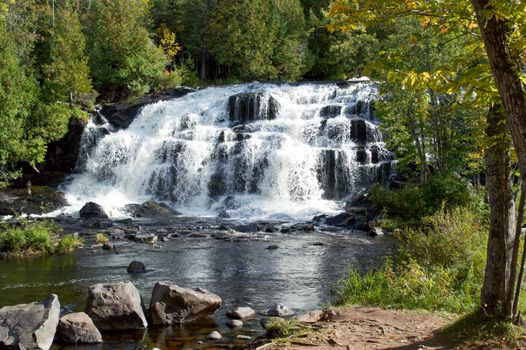
O’Kun de Kun Falls rounds out the trio of hidden waterfalls in the Keweenaw area mentioned by the official Keweenaw tourism site. Unlike Bond and Agate, O’Kun de Kun requires a longer walk. The trail follows an old rail grade through dense second-growth forest and ends at a narrow cascade that plunges into a dark pool. The hike is roughly a mile round trip on fairly level ground. Because it is less advertised, you may have the entire place to yourself on a weekday afternoon.
What to Expect on the Trail
The path to O’Kun de Kun Falls can be muddy after rain, so wear sturdy shoes. Mosquitoes are common in late spring and summer, so bring repellent. The payoff is a secluded spot where the only sound is water splashing on rock.
Spray Falls: A Lake Superior Spectacle
Spray Falls is one of the few waterfalls that cascades directly into Lake Superior. Located within Pictured Rocks National Lakeshore, it is not accessible by road. You have to hike the Chapel Basin Loop or take a boat tour to see it. The Chapel Basin Loop itself includes three different waterfalls, making Spray Falls just one part of a larger adventure. The main drop of Spray Falls is tall enough that wind often carries a mist across the beach, giving the cascade its name.
Hiking the Chapel Basin Loop
The Chapel Basin Loop is an approximately 10-mile hike that passes Chapel Falls, Mosquito Falls, and Chapel Beach, where Spray Falls meets the lake. Because of the distance and the need for a shuttle or a parked car at the far end, this trail sees fewer hikers than the shorter trails near Munising. It is a full-day commitment, but the reward is a string of hidden waterfalls that few visitors ever see.
Tahquamenon Falls: The Hidden in Plain Sight
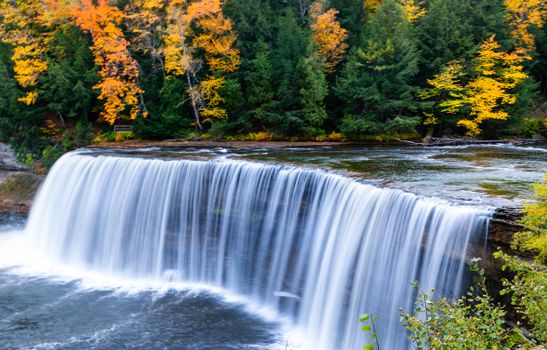
Tahquamenon Falls is the tallest waterfall in Michigan and at times the third most voluminous waterfall east of the Mississippi River. It lies in a state park about four and a half hours north of Grand Rapids. One travel writer described it as a huge waterfall hidden in the woods of Michigan’s Upper Peninsula. While it is popular and well-known, the fact that it is tucked deep in the forest makes it feel remote. The upper falls are the main attraction, but the lower falls are just as beautiful and can be reached by a footbridge or a small rowboat in summer.
Visiting Tahquamenon Falls State Park
Entrance to the state park costs $9 per vehicle per day for non-residents (as of 2016, so check the current fee before you go). The parking lots fill up by late morning on summer weekends. To avoid the crowds, plan to arrive before 9 a.m. or visit in the fall when the colors are at their peak. The viewing platforms at the upper falls are wheelchair accessible, and there is a brewery on site if you want to relax after your hike.
Munising Falls: An Accessible Treasure at Pictured Rocks
Munising Falls is one of the most accessible waterfalls in the Upper Peninsula, with an ADA-accessible path that leads to a viewing platform. However, as of April 2025, the trail is temporarily closed due to a washout. When it reopens, the short walk through a sandstone canyon makes it a must-see for visitors who cannot handle long hikes. Even though it is not hidden in the traditional sense, its location just outside Munising means it is often overlooked by tourists heading straight to the lakeshore boat tours.
When to Check for Reopening
The National Park Service manages Pictured Rocks National Lakeshore, so visit their website for the latest trail conditions. Once Munising Falls reopens, you can combine a visit with a trip to the nearby Alger Falls or Memorial Falls for a full afternoon of waterfall viewing within a few miles.
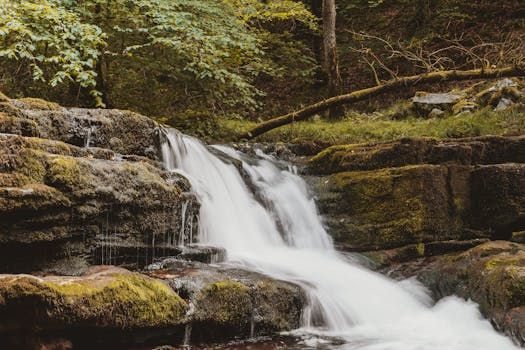
Hidden Waterfalls on the Chapel Basin Loop: Mosquito, Chapel, and More
The Chapel Basin Loop rewards hikers with three distinct waterfalls: Mosquito Falls, Chapel Falls, and then the grand finale of Spray Falls at the lake. Most visitors only do the short walk to Chapel Falls and turn around, but those who complete the loop are treated to a series of cascades that see very few people. Mosquito Falls is a wide, low cascade that is perfect for a splash on a hot day. Chapel Falls plunges over a high sandstone ledge and is one of the most photographed spots in the park, yet because it requires a 3-mile hike each way, it still feels hidden compared to roadside attractions.
Planning Your Loop Hike
Park at the Chapel Trailhead off H-58. The full loop is about 10 miles and includes some steep sections near the lake. Bring plenty of water, snacks, and a camera. If you only have time for one falls, make it Chapel Falls. The trail is well marked and maintained, but allow at least six hours for the complete circuit.
Frequently Asked Questions
What is the best time of year to see hidden waterfalls in the Upper Peninsula?
Spring is the best time because of increased groundwater, rainfall, and snowmelt. Flows are strongest in May and early June. Autumn also offers beautiful foliage, but water levels can be lower. Winter turns some waterfalls into ice curtains, but many are inaccessible by road.
Are there pet-friendly waterfalls in the Upper Peninsula?
Yes, there are pet-friendly waterfalls in the Upper Peninsula. Bond Falls and Agate Falls welcome leashed pets on their viewing platforms and trails. Always check current park rules at individual sites, as some areas within national lakeshores may have restrictions.
How many hidden waterfalls are there in the Upper Peninsula?
Because more than 300 waterfalls are scattered across the UP, and many are on private land or require long hikes, the exact number considered hidden is unknown. The falls listed in this article are well documented as off-the-beaten-path alternatives to popular spots like Tahquamenon and Munising.
Do I need a state park pass to visit these hidden waterfalls?
Tahquamenon Falls State Park requires a daily entry fee, which was $9 per vehicle for non-residents as of 2016. Bond Falls, Agate Falls, and O’Kun de Kun Falls are on public lands that do not charge an entrance fee. The Chapel Basin Loop is within Pictured Rocks National Lakeshore, which does not charge an entry fee, but you may need a parking pass depending on the trailhead.
The Upper Peninsula hides hundreds of waterfalls in its forests, many of them waiting for you to find them. Whether you follow the boardwalk to Bond Falls or hike the full Chapel Basin Loop, each cascade offers a quiet moment away from the busy world. Pack your sense of exploration, check the latest road and trail conditions, and head north to discover these hidden waterfalls for yourself.